
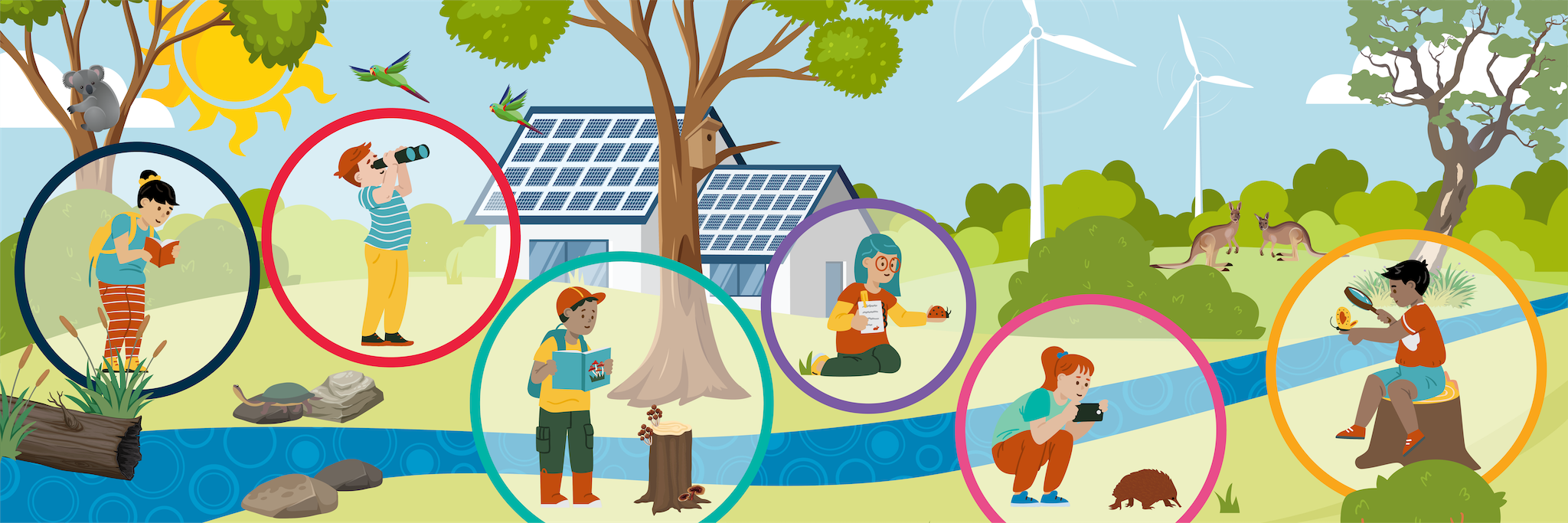
The ‘Macleay Eco Explorers’ Enviro-Stories program will provide local students with the opportunity to learn about the environment, climate change and how to manage and protect the Macleay Valley region’s biodiversity and natural resources.
This Enviro-Stories program gives students the opportunity to become one of our Macleay Eco Explorers as they research and learn local issues. Students will use this knowledge to create a storybook to help others learn about the magnificent Macleay Valley.
The Macleay Valley is a place of natural abundance, stunning landscapes, historic settlements and rich character and culture. The Macleay has quite an extraordinary diverse environment, comprising of beautiful mountains and forested areas, open farmlands, urban areas, sensational coastal beaches and seaside towns and villages.
Our Macleay region is home to over 15,000 hectares of National Parks and 79 kilometres of pristine coastline. The diverse range of individual plant species and vegetation range from coastal heathland to subtropical warm temperature and cool temperature rainforests. This broad variety of habitat supports a large diversity of fauna within our region.
Kempsey Shire Council’s corporate vision is to lead and work with our community to build and inspired, connected Macleay Valley. Our community is at the heart of our decision making and plays an essential role in setting our strategic direction.
The Kempsey Shire Council Local Government Area is located within the NSW Mid North Coast and covers an area of 3,380 km2 with a population of approximately 30,000 residents.
The principal town in the Shire is Kempsey. Kempsey is located approximately halfway between the state capitals of Sydney and Brisbane and is halfway between the regional centres of Port Macquarie and Coffs Harbour.
Kempsey Shire is bounded by:
- Nambucca Shire Council to the north
- Armidale Regional Council and Walcha Council to the west
- Port Macquarie-Hastings Council to the south
- The Pacific Ocean to the east.
What do I have to do?
STEP 1
Download the Story Template.
STEP 2
Research your Macleay Eco Explorers topic.
Click on the toggle below to show details of the 2026 Eco Explorer topic – Small Steps, Big Changes. Use the background information to help with your research.
What does “Small Steps, Big Changes” mean?
Looking after the environment does not always mean doing something huge or complicated. In fact, many of the most powerful changes start with small, everyday actions. When lots of people take small steps at school, at home, on farms, and in natural places; those actions add up to big, positive changes for the environment.
In the Macleay River Valley, the environment is all around us. It includes the Macleay River and its creeks, wetlands and estuaries, farms and paddocks, beaches and dunes, forests and national parks, and even school ovals, backyard gardens and towns. Everything is connected. What happens in one place can affect another place, sometimes far away. For example, rubbish dropped in a school playground can wash into stormwater drains, flow into creeks, and eventually end up in the Macleay River or the ocean.
This is why small steps matter. Turning off taps properly, putting rubbish in the right bin, planting a tree, or caring for a local creek might seem like little things. But when many people do them regularly, they protect habitats, save water, reduce pollution, and help plants and animals survive.
How small actions add up
Imagine one person picking up one piece of litter. That does not seem like much. But what if a whole class picks up litter every week? What if every school in the Macleay Valley does the same? Over time, thousands of pieces of rubbish are removed from the environment, making places safer for wildlife and nicer for people.
The same idea applies to water, energy, soil, and biodiversity. Saving a small amount of water each day helps protect rivers and wetlands during dry times. Looking after soil on farms and in gardens helps food grow and stops sediment washing into creeks. Protecting native plants helps birds, insects, frogs, and mammals that rely on them for food and shelter.
Small steps also help build good habits. When students learn to care for their environment while they are young, those habits often stay with them for life. Over time, this creates communities where caring for the environment is normal, expected, and valued.
Working together makes the difference
Environmental care works best when people work together. No single person can look after the whole Macleay River Valley on their own. But when students, families, schools, farmers, community groups, Traditional Custodians, councils, and volunteers all play their part, real change happens.
In the Kempsey region, many positive environmental actions are already happening because people work together. They help restore riverbanks, plant trees, remove weeds, monitor wildlife, clean up beaches, and care for walking tracks and reserves. The people give their time because they care about their local area and want to protect it for future generations.
Students are an important part of this teamwork. Even though they are young, their actions matter. When students get involved, they also inspire adults to think differently and act more carefully. Working together teaches responsibility, respect, and the idea that everyone has something valuable to contribute.
“Small Steps” students can take
“Small Steps, Big Changes” reminds us that everyone matters. Every choice, every action, and every effort counts. When students understand that their small steps are part of something bigger, they learn that they have the power to help care for the environment, now and into the future.
These are some suggestions of small, realistic actions that students in the Macleay Valley can take. These ideas can inspire their stories where characters show how everyday choices lead to big environmental changes.
At school
Students spend a lot of time at school, which makes it a great place to care for the environment. Possible small steps include:
- Putting rubbish and recycling in the correct bins
- Reducing waste by using lunchboxes instead of disposable packaging
- Turning off lights, fans, and screens when not in use
- Wildlife survey
- Saving water by turning taps off properly and reporting leaks
- Creating habitat areas with native plants for birds and insects
- Starting or helping with a veggie garden or bush tucker garden
- Picking up litter in the playground and school grounds
- Pest animal or weed surveys
These actions help schools become healthier, more sustainable places and show how teamwork makes a difference.
At home
What happens at home also affects the environment. Students can:
- Help sort household rubbish, recycling, and compost
- Save water by taking shorter showers and turning taps off
- Care for gardens by planting native species that suit the local climate
- Help look after pets responsibly so they do not harm wildlife
- Conduct wildlife surveys on their property
- Switch off lights and appliances when not needed
- Reuse items instead of throwing them away
- Control pest animals and weeds
These steps help families reduce waste, save resources, and protect local ecosystems.
On farms and rural properties
Farms are an important part of the Macleay Valley. Looking after land helps both food production and the environment. Small steps students might see or help with include:
- Protecting creek and river edges with vegetation
- Helping plant trees to provide shade and shelter
- Caring for soil to stop erosion
- Saving water during dry times
- Looking after dams and waterways
- Respecting native animals that live on farmland
- Help rehabilitate natural areas with native vegetation
- Provide wildlife corridors through the property
- Help parents prepare for disasters like floods and bushfires
These actions show how farming and caring for nature can work together.
In natural places
Natural areas such as beaches, rivers, wetlands, forests, and reserves need care too. Students can:
- Take rubbish home when visiting natural areas
- Stay on tracks to protect plants and habitats
- Respect wildlife by watching quietly and from a distance
- Join local clean-up or planting days
- Learn about local plants, animals, and ecosystems
- Share what they learn with others
These small steps help protect the special places of the Macleay Valley for the future.
STEP 3
Write and illustrate a 15 page story plus 1 cover page as outlined in the Story Template. Make sure you:
- View our Hints and Tips about how to write a good Enviro-Stories book. READ MORE
- Check out previous books to see how the books are laid out and the amount of text that has been used. GO TO THE LIBRARY
- Check the story to ensure any scientific or technical details are accurate.
- Check the spelling and grammar.
STEP 4
Fill in our evaluation form for TEACHERS and STUDENTS.
STEP 5
Post the story and original illustrations to:
Peter Coleman
Enviro-Stories
PO Box 143
Bruthen Vic 3885
Need some help?
For any questions about the Macleay Eco Explorers Enviro-Stories program, please contact:
Peter Coleman
Enviro-Stories Coordinator
Mobile: 0411 729 444
Email: admin@envirostories.com.au
Checklist before submitting your entry
Program Sponsor